Recently at our local Better Tech Club we introduced Mastodon and Fediverse to some of our members. The workshop was divided into two parts: a short presentation, followed by a practical part. I delivered the introduction, and the practical part was done in small groups, with members already familiar with Mastodon helping those interested.
Mastodon: a Social Platform that Respects You
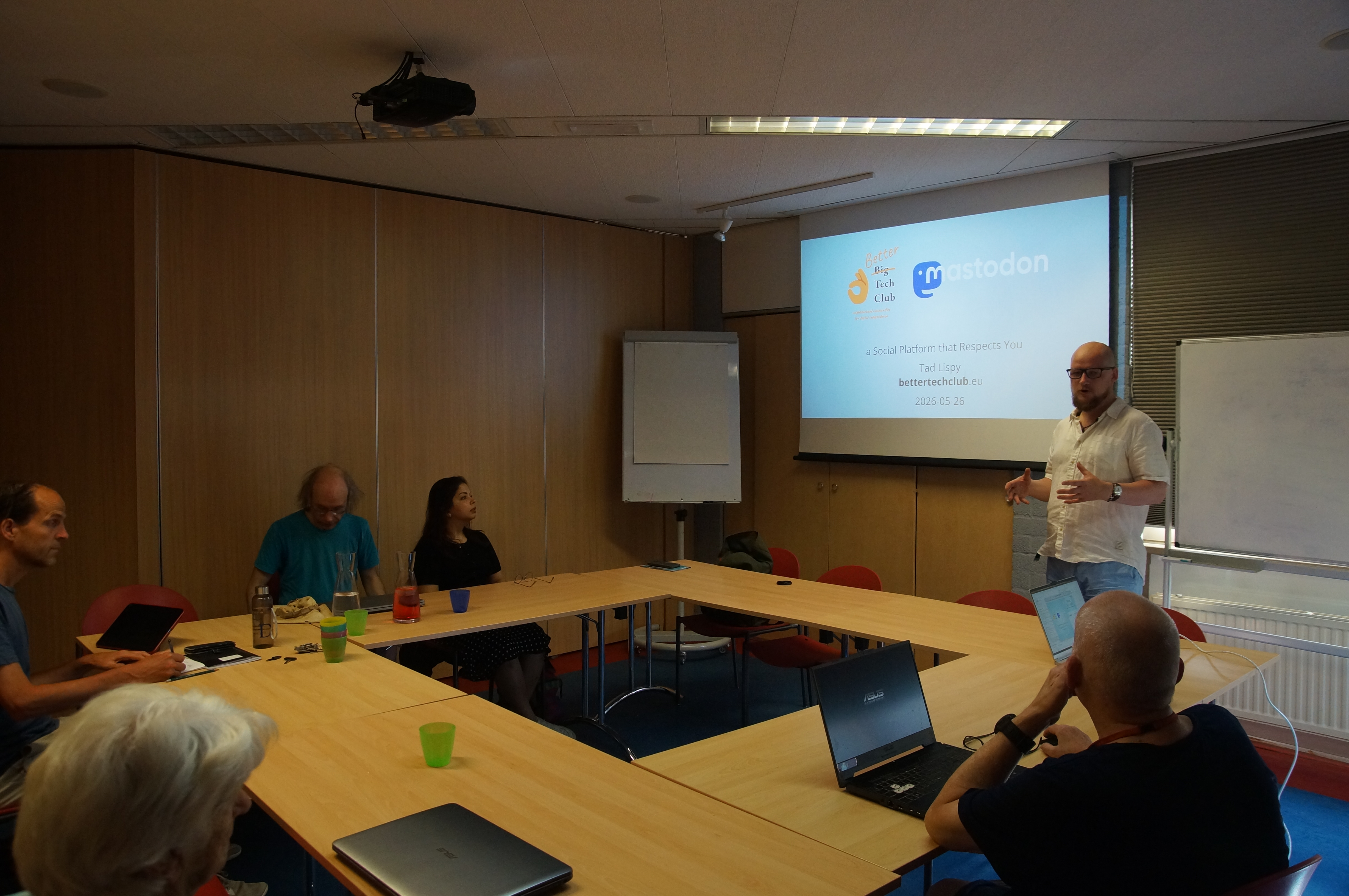
The presentation focused on a few central questions:
- What is a social network?
- Why are social networks important?
- What is the role of digital platforms? The good, the bad and the ugly.
- What can be done to improve the situation?
The term social network has two common meanings. The original, coming from sociology, refers to people you are connected with: friends, family, sport club, co-workers, professional connections. It also extends to their connections. For clarity I'll call this kind of thing a real social network.
The other meaning refers to digital platforms that capture and encode our social interactions. Platforms like Facebook, LinkedIn, TikTok, Xitter, Instagram, Mastodon, etc. Sometimes they are called apps. I'll call them social platforms.
Real social networks are very important. Some argue that they are what makes us human. We want to know what's up with the people we care about and to inform them what's up with us. We want to discuss what seems important. We need to organize and co-ordinate various activities, like birthday parties, trips with friends, political protests. We need to express our thoughts and feelings through words, arts, and crafts. We care how others feel and think about us and our expressions.
Social networks connect us beyond immediate physical proximity, sometimes to people we never met in the flesh. A society as a whole is made of a myriad overlapping social networks. To large extend they determine our politics - we listen to each other to decide what's right in the complex and interconnected world.
What most people call "Social Networks" these days is a relatively new phenomenon. They are distributed computer programs designed to capture and encode our real social networks. Perhaps the first well known social platform like that is Facebook, owned and controlled by Mark Zuckerberg via complex structure of corporate entities. Most of them are similarly controlled by a handful of US American billionaires with close connections to the regime. Some, like TikTok are owned by Chinese conglomerates.
In the beginning they offered convenience and promised to better connect us to more people - essentially to strengthen our real social networks. To large extent they did deliver. People with previously week social networks can now reach out to millions. In the process the owners of those networks gained subtle, but enormous power over our societies.
Because the platforms are so convenient to use, and give us access to more people, we tend to increasingly use them for our social interactions. Our connections with one another are mediated by platforms. Instead of inviting 20 people to a party by email and dealing with their responses, we can post an event on Facebook and sort out all questions in the comments section. We can post a photo of our house plant blooming, and it can be shared by our friends and then re-shared by thousands of strangers - some of who may become new friends. It's nice!
But the platforms are not run for our benefit. They are owned and controlled by a few people who are very hungry for wealth and power. They want us in, and they won't let us out easily. To keep us in, they monopolize access to our real social networks. Notice how you can't interact with people on those platforms, unless you are a user yourself. Rejecting the platforms come at an increasing cost of isolation and marginalization. Many of us want to leave, but the social cost is just too high.
Now that they run the medium through which we interact with one another, they learn great deal about us individually and collectively. Who do you know? Who do you trust? What do you care about? What newspapers do you read? Which news programs do you watch? What kind of music do you enjoy and with whom? What are you afraid of? What makes you angry?
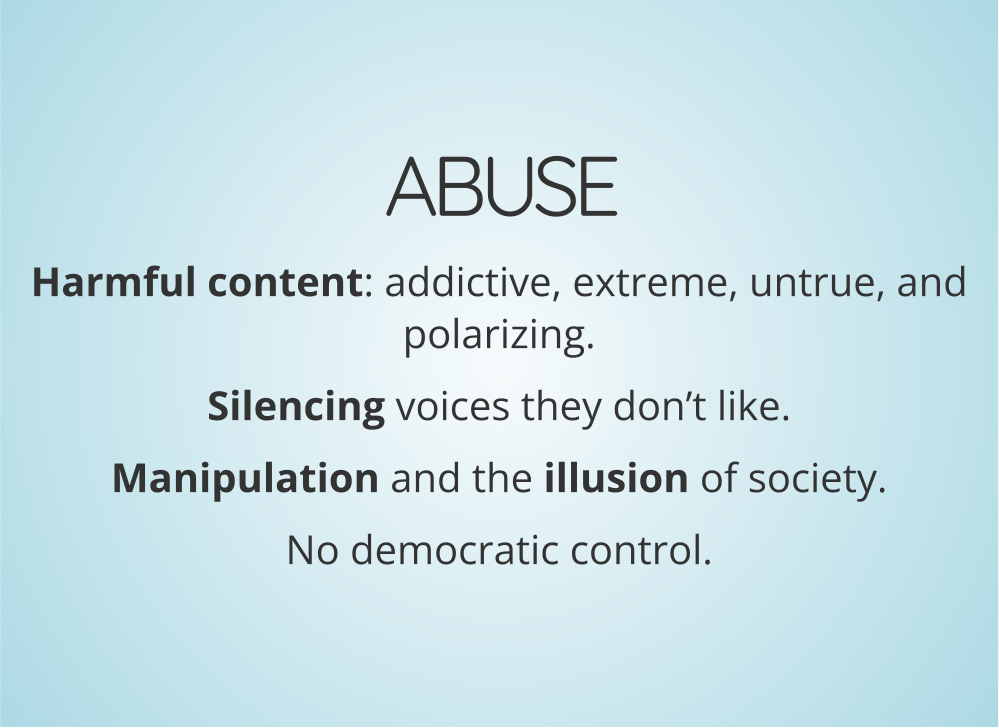
They want to know us better then we know ourselves, so that they can manipulate us into buying products we don't need, voting for politicians who don't support our causes, and sometimes violently attack one another in streets and across borders. The intimate knowledge and control over our communication channels give the owners of social platforms a powerful tool to achieve this. They amplify messages that make us afraid and angry, to the point where we can't think straight. They also silence voices they don't like. While they provide an illusion of togetherness, each of us is really alone there, facing a giant machine that feeds us content based on opaque algorithms.
It doesn't have to be like that. The way social platforms are operated is a deliberate choice. There is nothing in the technology itself that makes it harmful. It's just used this way by the owners.
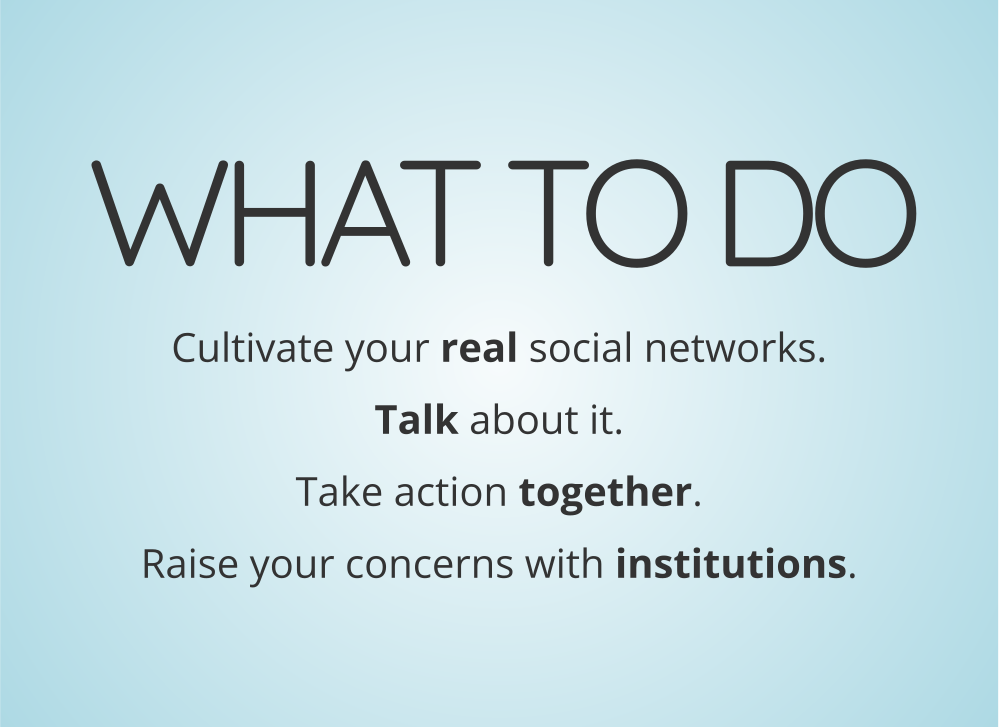
We need to reclaim our social networks. First of all, the real ones. Try building meaningful connections with people around you - your friends, family, colleagues etc. Talk with them about the threats of digital social platforms. You might be surprised how many people are aware of the problems. But to be effective, we need to take action together.
Some school, municipality or similar institution only use big tech platforms. Organize with like-minded people and demand change. There are better alternatives - platforms that grant us collective control.
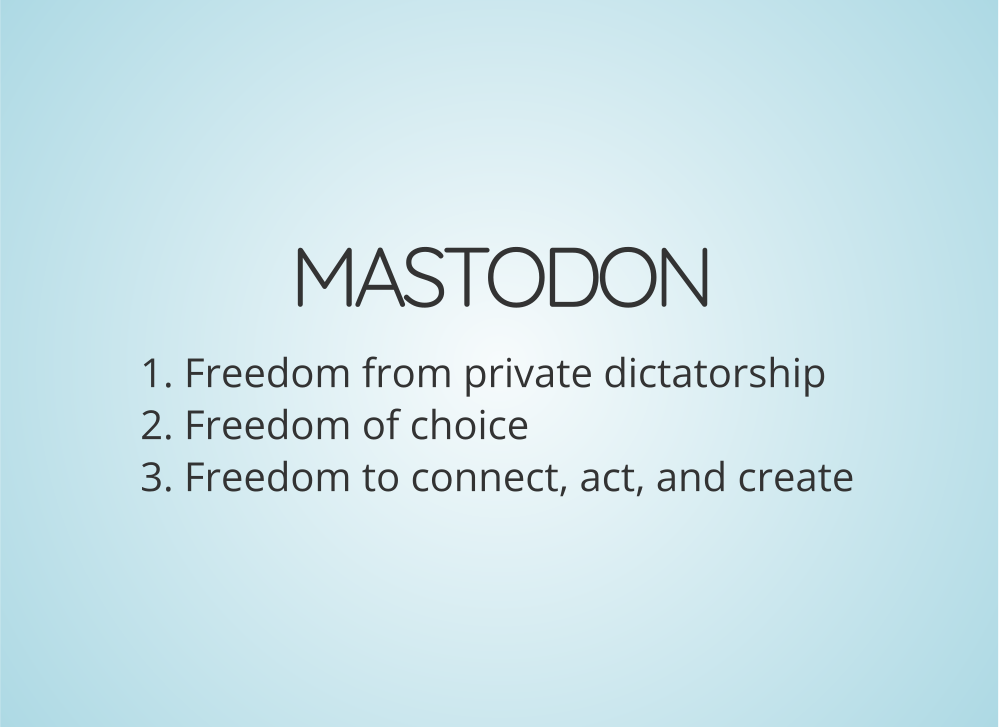
Mastodon is a social platform without a single owner. It consists of many communities that set their own rules and interact with one another - or not, if they don't want to. How does it work?
Consider the telephone network. If you know my number, you can call me from your phone. You don't need to register an account with my provider to do it. You don't even need to know who my provider is. You can call a friend on another continent, without thinking about providers in their country. That's because there is a worldwide standard for telephony, that has no owner. In principle anyone can start a telephone company and join the network. Granted, it probably requires a government license and a lot of capital, but it's not your competitors' decision to let you in.
In free market societies this creates healthy competition between telephone companies. If your provider mistreats you - maybe by hiking prices, or mishandling your sensitive data and leaking it to criminals - you can go to a competitor. In Europe you even get to keep your phone number! No need to tell everyone that you switched. They can still call you.
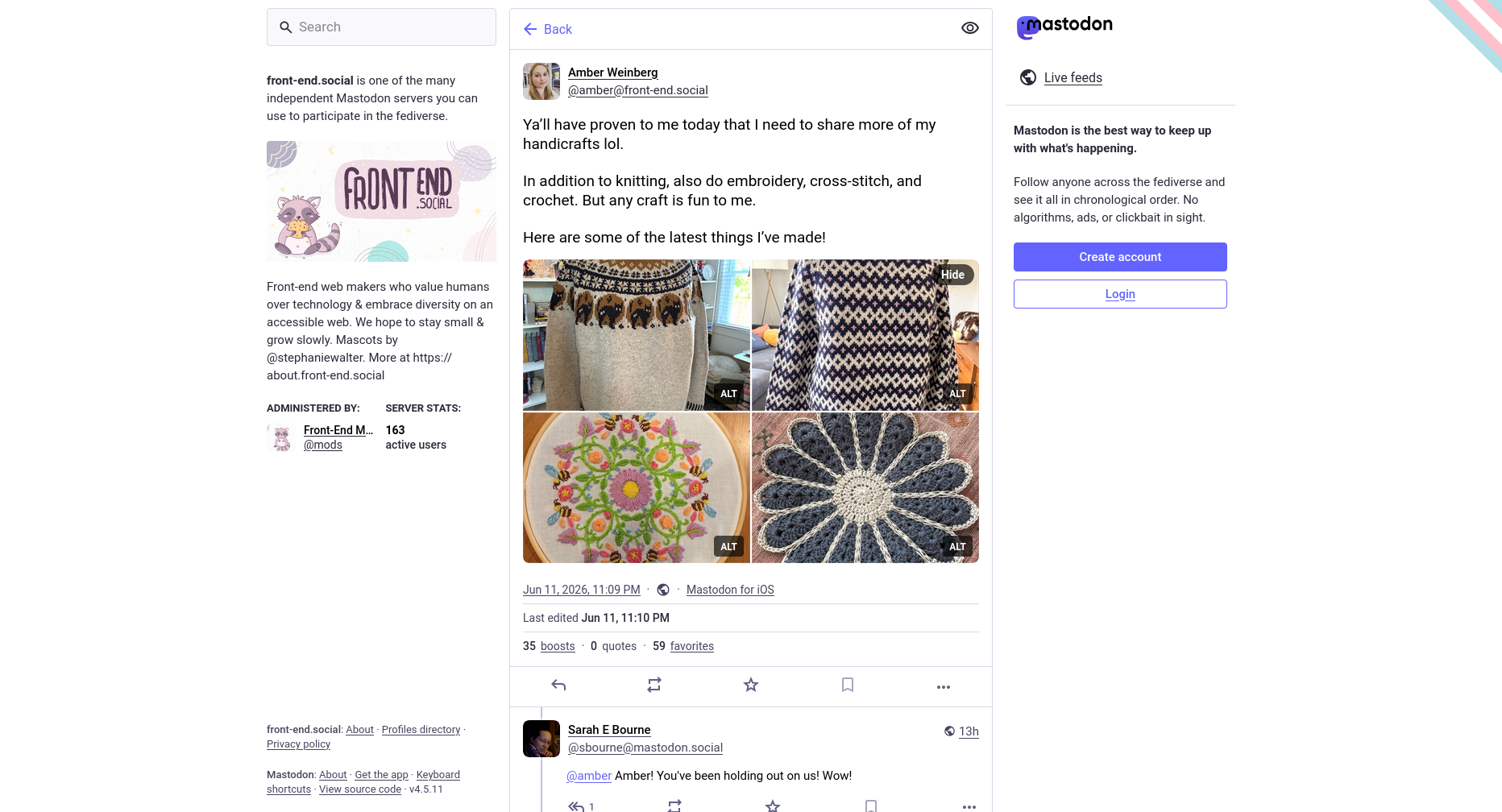
Mastodon operates on a similar principle. It's somewhat similar to Twitter, but unlike this monopolistic platform, anyone with sufficient technical skills can start a Mastodon server and provide you with an account. And there are thousands of servers around the world. Most of them are operated by small groups of volunteers, some by companies, and some even by a single person using the server only for themselves. They are all connected to each other, just like telephone operators around the world. This connectivity is called federation.
Administrators of those servers set rules and moderate the users. They can for example ban or allow certain kinds of content. Because servers are small, this often happens in consultation with users. And if you don't like how they handle things, you can switch to a different server or start your own.
One of the most important regulation mechanisms is de-federation. By default all servers "talk" to each other. That means, that being on one server you are still exposed to content from other servers. If you find content distributed there unacceptable, you can demand that your administrators de-federate with the offending server. If they don't listen to you, switch to a server that is already de-federated with the offender. That way most of hateful, untrue, deceptive, or distasteful content is suppressed. It's not that we ban this kind of content in the network (no one can do that), but most users just don't receive it. And no billionaire can force you to read or see bullshit that you don't want to see.
We believe that federated social platforms like Mastodon provide a better alternative to big tech. They allow us to connect with people all over the world, but offer a chance of decentralized, collective control of the operation. Personally I really enjoy interactions on Mastodon. Compared to corporate platforms, I find them more thoughtful, authentic, and humane. If you know some nice people who would appreciate it, give it a try together. A good way to start is described here: https://fedi.tips/.
Make sure to say "Hi 👋" to @lazurski@chaos.social.